
BOARD MEETING DATE: March 4, 2005
AGENDA NO. 34
Approve and Adopt Technology Advancement Clean Fuels Program Annual Report and Plan Update
SYNOPSIS:
As a requirement of the Clean Fuels Program funding, the Technology Advancement Office must submit to the Legislative Analyst by March 31st of each year an approved Annual Report for the past year and Plan Update for the current calendar year. Staff has reviewed the Clean Fuel Program with the Clean Fuels Advisory Group, the Technology Advancement Advisory Group, and other technical experts. Staff is submitting the Technology Advancement Clean Fuels Program Annual Report and Plan Update for Board approval.
COMMITTEE:
Technology, February 25, 2005, Recommended for Approval
RECOMMENDED ACTIONS:
- Adopt the attached update of the Technology Advancement Plan and include it in the AQMD’s Clean Fuels Program;
- Approve the attached Technology Advancement Office Annual Report; and
- Approve the attached Resolution finding that the update of the Technology Advancement Clean Fuels Program Plan and its proposed projects do not duplicate any past or present programs of specified organizations.
Barry R. Wallerstein, D.Env.
Executive Officer
Background
Achieving federal and state clean air standards in Southern California will require emission reductions from mobile and stationary sources beyond those available from current technologies. The AQMP relies on the expedited, future implementation of cleaner-burning fuels and advanced technologies in Southern California to achieve these standards. To meet the needs of the AQMP for progressively lower-emitting fuels and technologies, the AQMD adopted a Clean Fuels Program in 1988 and established the Technology Advancement Office to administer the program. Concurrently, the State Legislature authorized funds for the AQMD’s Clean Fuels Program via SB 2297 and subsequently renewed this funding authorization via SB 316 in 1993. On June 8, 1999, SB 98 (Alarcon) extended the Clean Fuels Program funding mechanism until January 1, 2005, added administrative requirements, and specified the creation of and expectations for the Clean Fuels Advisory Group. On September 22, 2003, SB 288 (Sher) extended the Clean Fuels Program funding mechanism until January 1, 2010.
The AQMD Clean Fuels Program is implemented as a public-private partnership in conjunction with private industry, technology developers, academic institutions, research institutions, and government agencies. This public-private partnership has enabled the AQMD to leverage public funds with outside investment in a ratio of more than $4 of outside funding to every $1 of AQMD funding.
Health and Safety Code (H&SC) Section 40448.5.1 requires that the AQMD adopt a plan that describes the expected cost and benefits of proposed projects prior to any Clean Fuels Program expenditure after January 1, 1996 and find that the proposed projects do not duplicate programs of specified organizations. The Board initially adopted such a plan at its March 8, 1996 meeting. SB 98 amended this provision by requiring annual updates to this plan and 30-day public notice to specified interested parties and the public prior to the annual public hearing at which the Board takes action on the Clean Fuels Program.
SB 98 also requires the preparation of an annual report with specified contents. This annual report requires the review and approval by an advisory group and the Board, prior to submittal to specified offices of the Legislature by March 31st of each year. This legislation also specifies the make-up of this advisory group and its primary responsibilities to make recommendations regarding the most cost-effective projects that advance and implement clean fuels technology and improve public health. The membership of this advisory group was previously approved by the Board on September 10, 1999. Changes to the composition are reviewed by the Governing Board Technology Committee and submitted to the Board for approval on an as needed basis.
Proposal
This package includes one combined document, the Technology Advancement Office Clean Fuels Program Annual Report and Plan Update, prepared by staff for the Board’s consideration. The first portion of the document is the draft Technology Advancement Office Clean Fuels Program Annual Report for 2004, and the second portion is the draft Technology Advancement Office Cleans Fuels Program Plan Update for 2005.
Technology Advancement Office Clean Fuels Program Annual Report 2004
The Annual Report covers projects and progress of the program for calendar year (CY) 2004. As discussed earlier, this report addresses all of the requirements specified in H&SC 40448.5.1(d). Specifically, the report includes the following required elements:
- A description of the core technologies that the AQMD considers critical to ensure attainment and maintenance of ambient air quality standards and a description of the efforts made to overcome barriers to commercialization of those technologies;
- An analysis of the impact of the AQMD’s Clean Fuels Program on the private sector and on research, development, and commercialization efforts by major automobile and energy firms, as determined by the AQMD;
- A description of projects funded by the AQMD, including a list of recipients, subcontractors, co-funders, matching state or federal funds, and expected and actual results of each project advancing and implementing clean fuels technology and improving public health;
- The title and purpose of all projects undertaken pursuant to the Clean Fuels Program, the names of the contractors and subcontractors involved in each project, and the amount of money expended for each project;
- A summary of the progress made toward the goals of the Clean Fuels Program; and
- Funding priorities identified for the next year and relevant audit information for previous, current, and future years covered by the report.
During CY 2004, the Governing Board approved 63 new projects, studies, or amended contracts to sponsor research, development, demonstration, and deployment projects of alternative fuel and other clean fuel technologies. The AQMD’s contribution to these projects exceeded $15 million, with total projects costs exceeding $44 million from other government organizations, private sector, academia and research institutes. These projects address a wide range of air quality issues with a diverse mix of advanced technologies. Figure 1 shows the distribution of the Clean Fuels Program funds approved by the Board in 2004.
During CY 2004, the AQMD continued the advancement of alternative fuel technologies with an emphasis on deployment of natural gas vehicles, expansion of the natural gas refueling infrastructure, and expansion of the hydrogen refueling infrastructure with hydrogen internal combustion engine vehicles.
In addition to the new projects, 18 research, development, and demonstration projects and 14 technology assessment projects or studies were completed in CY 2004. The project summaries are provided to the Governing Board Technology Committee during the year as the projects are completed. Summaries for each of these projects are provided in Appendix C of the Annual Report (Attachment B).
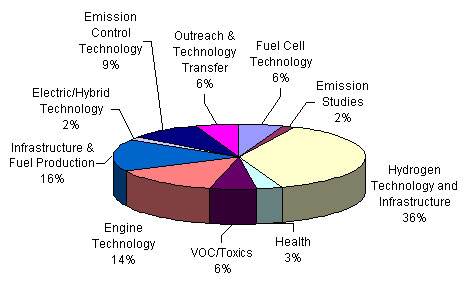
Figure 1: Distribution of Governing Board Approved Clean Fuels Program Funds
in Calendar Year 2004 (Total: $15 million)
As required, this annual report has been reviewed and approved by the SB 98 Clean Fuels Advisory Group and must be submitted to the state by March 31, 2005.
Technology Advancement Office Clean Fuels Program Plan Update
The attached Update to the Technology Advancement Plan for the Clean Fuels Program identifies potential projects to be considered for funding during 2005. The proposed projects reflect promising low- and zero-emission technologies and applications that are emerging in the different source categories. This update includes a number of proposed projects, not all of which are expected to be funded in the current fiscal year given the available budget. Projects not funded in 2005 may be considered for funding in subsequent years. There is no requirement to expend all of the allocated monies in any specific area within this calendar year.
In addition to identifying proposed projects to be considered for funding, this Update establishes eleven key technical areas of highest priority to the AQMD. Those high priority areas include:
- Fuel cell technology
- Hydrogen technology and infrastructure
- Engine technology (particularly in the heavy-duty alternative fuel sector)
- Emission control technology (with a focus on advanced after-treatment controls)
- Infrastructure and fuel production for alternative fuels
- Electric and hybrid electric technologies
- Stationary clean fuel technology
- VOC and toxics
- Emissions analysis (to further characterize engine exhaust emissions)
- Outreach and technology transfer
- Health studies
These technical priorities will necessarily be balanced by funding availability and the availability of qualified projects. Revenues from several sources support the AQMD’s Technology Advancement program. The principal revenue source is the Clean Fuels Program, which, under H&SC Section 40448.5 and Vehicle Code Section 9250.11, establishes mechanisms to collect revenues from mobile and stationary sources to support the program’s objectives, albeit with constraints on the use of the funds. Grants and cost-sharing revenue contracts from various government agencies, such as the California Air Resources Board, the California Energy Commission, and the United States Department of Energy, also support technology advancement efforts.
Figure 2 shows the potential distribution of AQMD Clean Fuels funds, based on projected program costs of $41 million for the 11 project areas discussed above. The expected actual project expenditures for 2005 will be much less than the total projected program cost since not all projects will materialize. The target allocations are based on balancing technology priorities, technical challenges and opportunities discussed previously, and near-term versus long-term benefits with the constraints on available SCAQMD funding. Specific contract awards throughout 2005 will be based on this proposed allocation, the quality of proposals received and evaluation of projects against standardized criteria, and, ultimately, the Board’s approval. At that time, additional details will be provided about the technology, its application, the specific scope of work, the project team capabilities, and the project cost-sharing.
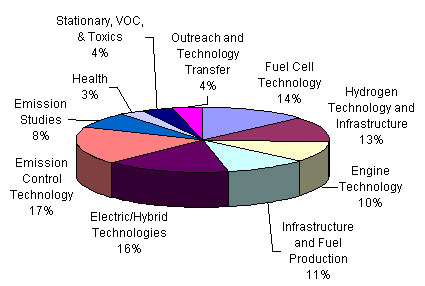
Figure 2: Projected Cost Distribution for Potential Projects in 2005 ($41 million)
The proposed update is the result of a comprehensive planning and review process. This process has included consideration of AQMP control measures and coordination activities involving outside organizations. As part of this process, staff hosts two one day retreats during the year to solicit input from the Clean Fuels Advisory Group, the Technology Advancement Advisory Group, and other technical experts; the two retreats were held in August 2004 and January 2005. During these retreats, the participants reviewed the current Technology Advancement projects and recommended near-term and long-term projects for consideration. These project suggestions, where appropriate, were included in this year’s Plan Update. Based on communications with the organizations specified in H&SC Section 40448.5.1 and review of their programs, the projects proposed in this update do not appear to duplicate any past or present projects. As each individual project is recommended to the Board for funding, staff will continue to coordinate with these organizations to ensure that duplication is avoided and ensure optimal expenditure of clean fuels program funds.
Attachments (2,930 KB)
- Resolution
- Technology Advancement Office Clean Fuels Program Annual Report and Plan Update
/ / /