
BOARD MEETING DATE: April 7, 2006
AGENDA NO. 27
Status Report on AQMD Support for the California Fuel Cell Partnership and Proposal to Renew Membership for Calendar Year 2006 and Continue Support for CaFCP Regional Coordinator Located at AQMD
SYNOPSIS:
On March 17, 2000, the Board approved joining the California Fuel Cell Partnership (CaFCP) as a full member. This status report summarizes the AQMD support for the CaFCP and the benefits received by the AQMD per the request made at the February 24, 2006 Technology Committee. Additional action is requested to continue AQMD’s participation in the CaFCP in an amount not to exceed $83,800 for calendar year 2006, and to also co-fund 50 percent, in addition to office space and utilities, for the CaFCP Regional Coordinator position located at the AQMD in an amount not to exceed $50,000. The total cash amount for the CaFCP activities will therefore not exceed $133,800.
COMMITTEE:
Technology, March 31, 2006, Recommended for Approval
RECOMMENDED ACTIONS:
- Receive and file the attached status report.
- Authorize the Executive Officer to:
- Execute a contract with Bevilaqua-Knight Inc., acting on behalf of the Partnership, to
- Continue AQMD’s membership for the Calendar year 2006 for a total amount not to exceed $83,800 for common expenses of the CaFCP;
- Continue support for a Regional Coordinator located at AQMD for a total amount not to exceed $50,000; and
- Provide one year of office space and utilities at the AQMD headquarters to the CaFCP on a month-to month basis.
- Approve membership renewal as outlined above contingent upon the CaFCP agreeing to the following requests:
- Consider relocating the headquarters or majority of its operations to the greater Los Angeles region for the next phase (2008-2012);
- Add several environmental/environmental justice group representatives as full members without dues;
- Provide detailed quarterly reports on CaFCP activities to the Governing Board in a format similar to the Monthly Public Affairs Report; and
- Allow AQMD staff to participate in the Planning Meetings for additional coordination and technical support purposes.
- Report back to the Technology Committee on the status of these requests.
- Execute a contract with Bevilaqua-Knight Inc., acting on behalf of the Partnership, to
Barry R. Wallerstein, D. Env.
Executive Officer
Background
The California Fuel Cell Partnership (CaFCP) was initiated in 1999 as a means to accelerate response to the CARB Zero Emission Vehicle (ZEV) regulations, which was a technology-forcing mandate requiring up to 22,000 ZEVs by 2003. The AQMP and the Technology Advancement Plan have identified fuel cells for on- and off-road applications to be a core technology for attaining and maintaining cleaner air quality. Because of the alignment of the AQMD and CaFCP goals for accelerated fuel cell vehicle commercialization, the AQMD Governing Board accepted the CaFCP formal invitation to join as a full member on March 17, 2000.
Initially, the CaFCP program focused on development of vehicle, infrastructure and outreach plans for future projects. Through 2001, the CaFCP demonstrated fuel cell cars and buses using gaseous hydrogen fuel. The CaFCP was involved in the demonstration of cars and buses using gaseous and liquid hydrogen and methanol in 2002 and 2003. A limited number of fleet customer placements began in 2002. In addition, the bus transit partners operated several zero-emission fuel cell buses. Members of the CaFCP are committed to the continuation of CaFCP activities through 2007.
The proposed CaFCP activities for 2006 are to
- Facilitate members’ placement of additional fuel cell vehicles and fueling stations in California, including fuel cell buses by coordinating and conducting outreach in demonstration communities, training first responders, and facilitating member learning exchange;
- Enable hydrogen fueling network in California by evaluating existing hydrogen stations and promoting station accessibility;
- Maintain and expand CaFCP’s position as a leading information source for hydrogen and fuel cell vehicles, in particular, specific member programs in California; and
- Maintain CaFCP organizational effectiveness and prepare for CaFCP’s future beyond 2007.
Major accomplishments during calendar year 2005 include:
- The demonstration of an increasing number of prototype fuel cell cars in California by several automakers, some now in their second or third generation;
- Provided training for emergency responders to help prepare communities for fuel cell vehicles and fueling; and
- Increased the presence of the CaFCP in Southern California through outreach and community workshops with Regional Coordinator staff.
The attached California Fuel Cell Partnership Status Report describes in more detail the organization of the CaFCP, the AQMD support for the past five years, and the benefits derived from participation in the CaFCP. The AQMD has provided over $1.1M in support over the past five years, but has also benefited from use of the CaFCP resources for emergency responder training and outreach, in particular the ride-n-drives at AQMD events. Technical and safety information exchange have also been used for the operation and support of AQMD funded hydrogen stations. Finally, the CaFCP provides a venue and forum for leveraging funding and developing projects with the major stakeholders to accelerate project deployments in the South Coast Basin.
Based on this report and further analysis by staff, the following proposal is submitted for Board consideration.
Proposal
Southern California remains a high priority for an increasing number of fuel cell vehicle demonstrations due to the high population of both light-duty vehicles and early-adopters, the most hydrogen fueling stations, and the region of greatest air quality need. In addition, it should be noted that CARB’s Mobile Source division and associated emission test facilities are located in southern California. Although the lease for the CaFCP headquarters in West Sacramento is through 2007, consideration should be given to either relocating (in entirety or a majority of the operations) to the region of highest interest to the automakers and with the most demonstrations for the next phase of operation (2008 through 2012). A site could be sought near the current CARB facilities or other appropriate area such as the South Bay or Irvine where several auto manufacturers have existing offices.
The current membership of the CaFCP is unique in that it encompasses government and industry. However, all the major stakeholders are not included, most notably absent are environmental groups and environmental justice groups, which have expressed some concerns about implementation of the California hydrogen highway in recent years. Staff therefore recommends that the CaFCP add several environmental and environmental justice organizations as full members while waiving their membership fees. Such action was considered previously, but rejected by CaFCP. Staff believes it is time to revisit this issue.
Finally, to keep the Governing Board more informed about and engaged in the CaFCP activities, staff recommends; (a) a detailed report be prepared quarterly summarizing activities and events, which will be submitted as part of to the Governing Board agenda, and (b) staff participation in the Planning Committee, a subset of the Steering Team which manages the activities of the CaFCP, to support the Governing Board representative since discussions are now initiating on the 2008-2012 phase of operation.
Providing the above conditions are met, staff recommends renewal of the membership, including 50% support for the southern California regional coordinator and continued Governing Board and staff participation.
Benefits to AQMD
Membership in the CaFCP is consistent with the Technology Advancement Office Clean Fuels 2006 Plan Update under “Demonstration of Fuel Cells Vehicles” and “Assessment and Technical Support of Advanced Technologies and Information Dissemination.” The AQMD supports the development, demonstration and commercialization of zero-emission and near-zero emission vehicles, and strives to educate public and private organizations regarding the benefits and characteristics of these vehicles.
Sole Source Justification
Section VIII.B.2. of the Procurement Policy and Procedure identifies four major provisions under which a sole source award may be justified. This request for a sole source award is made under provision B.2.d.: Other circumstances exist which in the determination of the Executive Officer require such waiver in the best interest of the AQMD. Specifically, these circumstances are B.2.d.(1): Projects involving cost sharing by multiple sponsors.
Resource Impacts
The AQMD’s share of the calendar year 2006 common project costs in the CaFCP is not to exceed $83,800 to cover administrative, technical and program management cost, plus half the cost and in-kind support needed to add a Regional Coordinator located at AQMD reporting to the CaFCP Executive Director, for a total amount not to exceed $133,800. AQMD will enter into an agreement with Bevilaqua-Knight, Inc. (BKI). BKI has been retained by the CaFCP, through a subcontract agreement with Ballard Power Systems, to provide the needed support for the common tasks agreed to by the CaFCP.
As listed below, each Partner is providing $83,800 or more plus in-kind support for defraying the costs of the CaFCP including:
- Several auto manufacturers (General Motors, Toyota, DaimlerChrysler, Ford Motor Company, Honda, Hyundai, Nissan, and Volkswagen);
- Four energy companies (BP Amoco, Shell Hydrogen, ChevronTexaco and ExxonMobil);
- Two fuel cell companies (Ballard Power Systems and UTC Fuel Cells); and
- Seven government agencies (AQMD, CARB, California Energy Commission, U.S. DOE, U.S. DOT, U.S. EPA, and the National Automotive Center).
Sufficient funds are available from the Clean Fuels Fund, established as a special revenue fund resulting from the state-mandated Clean Fuels Program. The Clean Fuels Program, under Health and Safety Code Sections 40448.5 and 40512 and Vehicle Code Section 9250.11, establishes mechanisms to collect revenues from mobile sources to support projects to increase the utilization of clean fuels, including the development of the necessary advanced enabling technologies. Funds collected from motor vehicles are restricted, by statute, to be used for projects and program activities related to mobile sources that support the objectives of the Clean Fuels Program.
Attachment
California Fuel Cell Partnership Status Report
California Fuel Cell Partnership Status Report
The following status report was requested at the February 24, 2006 Technology Committee meeting in order to review and assess the AQMD’s participation in the California Fuel Cell Partnership (CaFCP). The report is divided in several subsections for clarity. The Background summarizes the makeup of the CaFCP and the current operation followed by a description of the AQMD Support for the past five years. The CaFCP Benefits section describes the different areas where AQMD derives value, and a short Summary section concludes the status report.
Background
The CaFCP was initiated in 1999 as a means to accelerate response to the CARB Zero Emission Vehicle (ZEV) regulations, which was a technology-forcing mandate requiring up to 22,000 ZEVs by 2003. The AQMP and the Technology Advancement Plan have identified fuel cells for on- and off-road applications to be a core technology for attaining and maintaining cleaner air quality. Because of the alignment of the AQMD and CaFCP goals for accelerated fuel cell vehicle commercialization, the AQMD Governing Board accepted the CaFCP formal invitation to join as a full member on March 17, 2000.
The California Fuel Cell Partnership is a collaboration in which several companies and government entities are independent participants. It is not a joint venture, legal partnership, or unincorporated association. The CaFCP membership currently includes eight auto manufacturers (DaimlerChrysler, Ford Motor Company, General Motors, Honda, Hyundai, Nissan, Toyota, and Volkswagen), four fuel companies (BP Amoco, Shell, ChevronTexaco, and ExxonMobil), two fuel cell companies (Ballard Power Systems and UTC Fuel Cells), and seven government agencies (AQMD, CARB, California Energy Commission, U.S. Department of Energy, U.S. Department of Transportation, U.S. EPA, and the National Automotive Center).
In addition, associate partners Air Products and Chemicals, Praxair, Stuart Energy, Proton Energy, Pacific Gas & Electric, Ztek, and the UC Davis Institute of Transportation Studies have joined to contribute needed expertise. Three California transit agencies, SunLine Transit, AC Transit, and Santa Clara Valley Transportation Authority are participating as the host sites for the demonstration of fuel cell-powered transit buses.
Initially, the CaFCP program focused on development of vehicle, infrastructure and outreach plans for future projects. Through 2001, the CaFCP demonstrated fuel cell cars and buses using gaseous hydrogen fuel. In 2002 and 2003, the CaFCP was involved in the demonstration of cars and buses using gaseous and liquid hydrogen and methanol. A limited number of fleet customer placements began in 2002. In addition, the bus transit partners operated several zero-emission fuel cell buses. Members of the CaFCP are committed to the continuation of California Fuel Cell Partnership activities through 2007.
The CaFCP has 13 full-time staff and one intern to administer the technical programs, perform outreach, and conduct emergency responder training. The headquarters, in West Sacramento, has a hydrogen fueling station and eight automotive maintenance bays for the members. The CaFCP currently has a lease on the building, which runs to the end of 2007, concurrent with the next phase of the CaFCP operation (2008-2012).
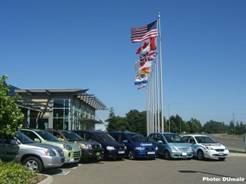
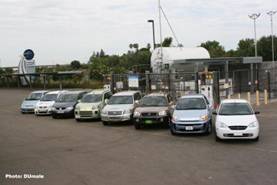
Figure 1: CaFCP Headquarters and Refueling Station
The CaFCP is organized into several functional groups. The Steering Team provides the overall guidance to the CaFCP operations and meets quarterly, with full members providing input to the consensus-based process. The Planning Committee, a subset of the Steering Team which also meets quarterly, manages the activities of the CaFCP by vetting items prior to bringing them before the Steering Team. The Membership Committee considers new full and associate member proposals, and the Financial Committee oversees the finances of the CaFCP. The Steering Team and its three committees are comprised of high level officials. Additional teams are staffed by member organizations at their discretion. The Communications Team handles the outreach and educational aspects of the CaFCP, including the road rallies, and the Working Group provides the technical programs for member interaction.
The goals of the CaFCP through 2007 are to:
- Facilitate members’ placement of up to 300 fuel cell cars and buses into fleets, operated by real-world users, primarily in two main areas of California – the greater Los Angeles region, and the Sacramento-San Francisco area;
- Promote fuel stations to support the vehicle fleets and prepare communities for fuel cell vehicles and fueling;
- Promote the development of practical codes and standards and encourage “common-fit” fueling protocols at the pump; and
- Enhance public awareness and exchange information and resources worldwide.
AQMD Support
The AQMD has funded the CaFCP since March 2000 at the full member rate of $83,800. Since 2004, the AQMD has also co-funded 50% of the southern California regional coordinator at $50,000 to increase the activities of the Partnership in southern California. The AQMD also covers the cost for office space and utilities for the southern California regional coordinator, who is located in the AQMD diamond bar facility (i.e., approximately $2,500 in-kind contribution).
The AQMD supports the CaFCP through AQMD Governing Board Member and staff resources as well. Two Board Members and up to five staff have participated for the AQMD. Board Members are involved at the highest level and work to guide the organization through the Steering and Planning Teams. Staff participates in the Communications Team and the Working Group, which is comprised of four active teams: Safety, Bus, InterOperability, and DemoNet (user information exchange). The schedule for meetings is shown in Table 1 although the Working Group Teams meet more frequently by conference call.
Table 1: CaFCP Meeting Schedule
|
Event |
Schedule |
Participants |
|
Steering Team |
Quarterly |
Board Members and Staff |
|
Planning Group |
Quarterly |
Board Members |
|
Communications Team & Working Group |
Quarterly (in person) |
Staff |
|
Road Rally |
Annually |
Board Members and Staff |
|
Workshops and Outreach Events |
As Needed |
Board Members and Staff |
Aside from the Working Group meetings and conference calls, staff also briefs the AQMD Governing Board Members for the Steering Team meetings. A report to the Technology Committee (and then to the Governing Board) is also submitted for each Steering Team meeting. As a result, quarterly management and executive management level review occur as well. The total costs for the five years of support, including travel and labor, are shown in Table 2.
Table 2: AQMD Support for CaFCP
|
2000 |
2001 |
2002 |
2003 |
2004 |
2005 | |
|
Direct Funding |
$83,800 |
$83,800 |
$83,800 |
$83,800 |
$133,800 |
$133,800 |
|
Staff Resources |
$77,524 |
$74,689 |
$104,346 |
$75,276 |
$74,009 |
$57,946 |
|
Board Members |
$6,528 |
$5,695 |
$6,609 |
$4,431 |
$4,738 |
$3,755 |
|
Local Events* |
$0 |
$3,000 |
$2,600 |
$8,236 |
$4,600 |
$2,100 |
|
Subtotals |
$167,852 |
$167,184 |
$197,355 |
$171,743 |
$217,147 |
$197,601 |
|
Total |
$1,118,882 | |||||
* includes office space for regional coordinator
CaFCP Benefits
The CaFCP has four major areas where the AQMD derives benefits:
- Identification, discussion, and resolution of technical issues;
- Outreach and education;
- Emergency response training and community workshops; and
- Forum and venue for establishing relationships for partnering.
All of the CaFCP groups are led and populated by members with CaFCP staff serving to administer and manage the groups. Each of the above areas is briefly summarized in the following sections.
Technical Issues
The Working Group is the technical component of the CaFCP and is currently comprised of four active teams (Safety, Bus, InterOperability, and DemoNet) which focus on technical and implementation issues critical to the commercialization success of fuel cell vehicles. These groups have broad responsibilities, but only the areas beneficial to the AQMD are discussed below.
The Safety Team is responsible for informing safety best practices for hydrogen stations and vehicle through member presentations and documentation of the safety “learnings” and best operating practices. These learnings inform members about practical issues to improve the safety of hydrogen stations, which helps AQMD staff provide guidance on the safe operation of AQMD funded hydrogen stations. The Safety Team is also responsible for developing the Emergency Response Guide for first responders, which provides emergency procedures related to hydrogen stations and fuel cell vehicles. For example, the Emergency Response Guide includes high pressure hydrogen and high voltage line diagrams for the different model fuel cell vehicles so emergency personnel can avoid these when extracting occupants from a vehicle. These guides have been provided to six local fire departments in the South Coast Basin with plans for further distribution when the updated Guide is completed (planned for October 2006).
The Bus Team goals are to support member proposals for federal funding, provide outreach materials, and support transit agencies as buses are placed into revenue service. The AQMD has funded a fuel cell bus at Sunline Transit and remains interested in demonstrating the cleanest possible technology. Transit buses offer an excellent opportunity for fuel cells because they often serve environmental justice areas and would allow the highest population to experience fuel cells.
The InterOperability Team (IOT) is focused on identifying and solving issues related to the interface between fuel cell vehicles and the fueling station. The IOT has developed two pieces of equipment to assist in the performance evaluation of hydrogen stations: the station test apparatus, which simulates a vehicle during fueling to allow testing of the fueling station, and the hydrogen quality sampling apparatus, which allows the sampling of hydrogen at the dispenser nozzle for hydrogen quality analysis. Both apparatus were developed for members to test whether their hydrogen stations are performing within appropriate temperature, pressure, and quality guidelines. Another useful hardware strategy promoted by the CaFCP is the Type I communication fill, which allows fast-fill of hydrogen by monitoring temperature and pressure of the vehicle during the fueling event. The AQMD required this fueling protocol in the hydrogen Prius project to ensure complete and safe filling of these vehicles. The IOT also has established a sub-team to evaluate new fueling and system protocols, and a sub-team that reviews stations in operation and provides information to members interested in developing new hydrogen stations and demonstrating new vehicles, especially to encourage station and vehicle interoperability and station accessibility.
DemoNet is a new user’s forum for members operating vehicles and fueling stations to share experiences and ask questions which may or may not be technical or safety related. Questions and learnings that raise technical or safety issues are referred to the appropriate Working Group team for further consideration or to the Steering Team for broader discussion. DemoNet provides a user driven feedback mechanism to improve and optimize vehicle and fueling interaction.
Outreach
The CaFCP has a strong outreach and education function. A major “road rally” is staged every year to highlight fuel cell vehicles, educate decision-makers, and demonstrate progress of the technology to the general public. Two road rallies were conducted in southern California in 2003 and 2004. The “Rally through the Valley” occurred in 2003 and ran from West Sacramento through the San Joaquin Valley to the Los Angeles Zoo and Peterson Automotive Museum. In 2004, “Cruisin’ Southern California” started at the AQMD, with stops at Long Beach and Costa Mesa, and ended at San Diego Both of these events featured AQMD Board Members as speakers.
The CaFCP also conducts “ride-n-drives” to allow targeted audiences and the general public to test drive fuel cell vehicles. These events help to demystify the technology and demonstrate the viability of the vehicles. The CaFCP has conducted hundreds of these events, engaging over 800,000 individuals. Two of these events were specifically for the AQMD: the August 2004 Hydrogen Conference in Palm Springs and the October 2005 State of the Fuel Cell Media Event at the Orange County Auto Show. CaFCP staff managed the ride-n-drive and provided the fuel cell vehicles with AQMD support.
Finally, the CaFCP maintains a website which includes informational resources and an updated map of hydrogen stations and fuel cell vehicles in California. The southern California region is dominated by the stations supported by the AQMD.
Training
Training of emergency first responders and workshops for community members, city staff, and fleet personnel are also key functions provided by the CaFCP. The training is to educate and inform emergency personnel (mostly fire fighters) who may need to respond to a fuel cell vehicle accident or station incident. As mentioned previously, the Emergency Response Guide is an excellent resource for first responders and has been distributed to local fire departments in the South Coast Basin. In addition, courses have been conducted to train over 400 first responders in the South Coast region. The summary of training by year is shown in Table 3.
Table 3: First Responders Training Summary
Number of Trainees
Years
Inside AQMD
Outside AQMD
2002
63
75
2003
26
183
2004
144
43
2005
185
152
Community workshops are often held concurrently with training for city staff, community members, and fleet personnel to assist them in understanding hydrogen and fuel cell vehicles. These events are directed at educating decision-makers in local governments since early demonstrations will occur in fleet applications.
Partnering
The final, overarching CaFCP value is providing a forum and venue to cultivate relationships with all the key stakeholders in developing commercially viable fuel cell vehicles and hydrogen technologies. These interactions provide the AQMD with exposure to the individuals responsible for conducting demonstrations and facilitate accelerated project discussions. Project leveraging with other agencies, in particular the DOE, is assisted by having access to the key program managers at prescribed meetings.
Summary
The CaFCP is a unique organization of major stakeholders for fuel cell vehicle commercialization, including government agencies, automakers, energy companies, and technology providers. Participation has assisted AQMD staff in the operation of its station and those funded by the AQMD through information exchange, particularly regarding safety and the vehicle/fueling interface, outreach to communities, utilizing CaFCP’s existing materials, and training of emergency personnel. The CaFCP also provides a valuable forum for cultivating relationships, discussing projects with potential co-funders, and jointly exploring currently unresolved issues challenging commercial implementation, such as fire marshal permitting and station public accessibility guidelines. Although many of these benefits would eventually be made public, involvement at the emerging stages with the major stakeholders provides AQMD with the opportunity to accelerate the development and affect the implementation. Finally, since hydrogen and fuel cell projects only represent approximately 20% of the Technology Advancement Office’s focus for the near-term (Clean Fuels Program 2006 Plan Update, March 2006), AQMD staff rely on CaFCP resources for outreach and to keep up-to-date on emerging technical issues.