
BOARD MEETING DATE: January 5, 2007
AGENDA NO. 16
Rule and Control Measure Forecast
SYNOPSIS:
This report highlights AQMD rulemaking activity and public workshops potentially scheduled for the year 2007.
COMMITTEE:
Not Applicable
RECOMMENDED ACTION:
Receive and file.
Barry R. Wallerstein, D.Env.
Executive Officer
Progress in 2006
Significant progress was made in 2006 in the development and adoption of rules and rule amendments. Seventeen (17) rules were amended and five (5) new rules were adopted.
2003 AQMP Implementation
As reported in the Rule and Control Measure Forecast report for January 2005, the 2003 AQMP short-term measure commitment for VOC, NOx, PM10, and SOx emission reductions by the year 2010 have been exceeded.
No specific control measures were identified in the 2003 AQMP for adoption in 2006. However, the long-term commitment for VOC includes a 10 ton per day reduction in 2006. Excess reductions by the end of 2005 and reductions in 2006 partially cover this commitment. The rule calendar for 2007 includes continued implementation of remaining 2003 AQMP control measures and early actions from the proposed 2007 AQMP, which are expected to yield additional VOC emission reductions.
With the SIP rulemaking activity since the adoption of the 2003 AQMP including rules adopted and amended in 2006, the AQMD achieved 29.6 tons per day of VOC reductions by 2010. Five VOC rules were amended with 0.92 tons per day VOC reductions from Rule 1113.
Rule 223 – Emission Reduction Permits for Large Confined Animal Facilities was adopted to implement SB700. The rule requires permits and annual plans for these facilities to reduce emissions to the maximum extent feasible. No emission reductions were quantified for this rule, although VOC reductions will occur through implementation of various mitigation measures.
The following table summarizes the rules adopted or amended in 2006 and the emission reductions achieved that contribute to SIP reductions for the 2003 AQMP.
Rules Adopted or Amended in 2006 and Emission Reductions Achieved
(2010 Planning Inventory, tons per day)
|
Rule |
Control Measure |
Pollutant |
Reductions |
|
3502 |
n/a |
PM10 |
0.07 tpd PM10 |
|
1113 |
CTS-10 |
VOC |
0.92 tpd |
The table below summarizes the 2003 AQMP commitment and emission reductions cumulatively achieved by the adopted and amended rules as of the end of 2006.
2003 AQMP Commitment and Net Emission Reductions Achieved
(2010 Planning Inventory, tons per day)
|
Pollutant |
Commitment as of 2006 |
Achieved as of 2006 |
|
VOC |
35.5 |
29.2 |
|
NOx |
3.0* |
8.7 |
|
PM10 |
2.2 |
2.5 |
|
SOx |
2.1 |
3.8 |
* The 2003 AQMP had a total of 5.1 tons per day NOx commitment. However, 2.1 tons per day from an SCAQMD truck stop electrification measure were accomplished as part of CARB’s truck idling regulation. The SCAQMD commitment of 3.0 tons per day NOx reflects this adjustment.
Even though the total VOC reductions are less than the commitment for the year 2006, the figure below, from the draft 2007 AQMP, shows that sources under SCAQMD jurisdiction are below the 2003 AQMP allowable emissions for the year 2010 for both VOC and NOx. The reductions exceeding the expectation are primarily because many facilities operate below compliance limits in rules and benefits of new source review are not adequately accounted for in the previous estimates.
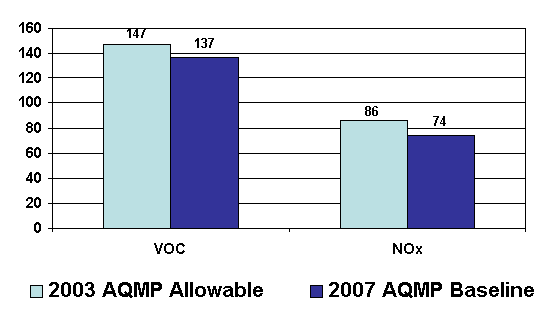
Projected 2010 Emissions from AQMD Sources Compared with 2010 Allowable Emissions Committed to Under the 2003 AQMP
Implementation of the 2004 Addendum to the 2000 Air Toxics Control Plan
Significant progress was made in reducing air toxics in 2006. Two new rules for freight railroads were adopted. Rule 3501 – Recordkeeping for Locomotive Idling, and Rule 3502 – Minimization of Emissions from Locomotive Idling, were adopted in 2006. Amendments to Rule 1403 – Asbestos Emissions from Demolition/Renovation Activities, improved enforcement and rule effectiveness. Rule 1470 -Requirements for Stationary Diesel-Fueled Internal Combustion and Other Compression Ignition Engines was amended to include changes made to the state Air Toxic Control Measure. Regulation IX – Standards of Performance for New Stationary Sources (NSPS) was updated in 2006 to incorporate by reference changes made by EPA.
SCAQMD adopted its first rule developed to reduce odors, which was part of the Potential Control Strategies to Address Cumulative Impacts. Rule 410 – Odors from Transfer Stations and Material Recovery Facilities, was designed to reduce odors from municipal solid waste handling through preventative approaches.
The following table summarizes rules that implemented the 2003 Addendum to the Air Toxics Control Plan, the Potential Strategies to Address Cumulative Impacts, and other efforts to reduce air toxics.
Implementation of 2003 Addendum to the Air Toxics Control Plan
Rules Adopted or Amended in 2006
|
Rule |
Pollutant |
Description |
|
410 |
Odors |
Prevent odors from waste handling |
|
1470 |
Diesel PM |
Align with ATCM changes |
|
3501 |
PM10 and NOx |
Recordkeeping |
|
3502 |
PM10 |
0.07 tpd PM10 |
Others
Some rule amendments address other issues or follow-up on commitments made when rules are adopted or amended. For example, Rule 1157 - Aggregate Facilities, was amended to streamline and simplify high wind exemption provisions.
In addition, administrative rules are adopted, such as Regulation III – Fees, which is updated annually. Rule 219 – Equipment Not Requiring a Written Permit Pursuant to Regulation II, was amended twice to add or remove exemptions for specific equipment and to address streamlined standard permits for small agricultural facilities. Rule 1315 – Federal New Source Review Tracking System, was adopted to formalize AQMD’s accounting methods for tracking credits and debits in order to demonstrate equivalency with federal new source review offset requirements. Rule 1309.1 – Priority Reserve, was amended to allow access to offset credits for electric generating facilities.
Technology Assessments
Additional technology assessments were conducted in 2006 to monitor the progress in technology-forcing rules. These studies include Rules 1171, 1131 and 1146.2. As a result, 4.7 tons per day of VOC reductions were reaffirmed for Rule 1113. However, 2.5 tons per day reductions from Rule 1171 were extended until 2008, but subject to another technical assessment in 2007.
Rule 1146.2 – Emissions of Oxides of Nitrogen from Large Water Heaters and Small Boilers, was amended twice in 2005. The first amendment replaced January 1, 2005 and January 1, 2006 compliance dates with an effective date when the equipment becomes 15 years old. This amendment resulted in 0.4 tpd NOx foregone reductions in 2010. A subsequent amendment requires lower emission limits for new units, and will more than make up for the foregone reductions, but not by 2010. The 2003 AQMP includes a SIP set aside for technology assessments or rule relaxations, which covers the foregone reductions in 2010. No other NOx or SOx rules were adopted or amended, and no emission reductions from PM10 rules were taken as SIP credit in 2006.
In addition to the amended and adopted rules, staff conducted several technology assessments in 2006 to explore and identify potential sources for additional reductions. A technology assessment conducted on inkjet printing operations concluded that there were no cost-effective retrofit control technologies to further reduce emissions from these operations at this time. A technology assessment conducted on storage tanks not currently covered by Rule 462 concluded that there is a very small potential for additional reductions (total inventory estimated at less than 0.08 tons of VOC per day) and the available retrofit control technologies to be highly cost-ineffective. Staff initiated a technology assessment on polyester resins utilized by composite manufacturing operations (Rule 462). Preliminary findings of this ongoing assessment is that lower monomer content resins for certain applications may be a viable and cost-effective strategy for further emissions reductions from these operations. Staff expects this assessment to be completed in early 2007 and be followed by a rule amendment. Staff has also initiated a technology assessment on several consumer products not currently regulated by CARB that could potentially be regulated by the District that may result in additional emission reductions.
2007 MASTER CALENDAR
Advance Target for Board Hearings
Below is a list of all rulemaking activity scheduled for the year 2007. The last
three columns refer to the type of rule adoption or amendment: AQMP refers to
the adoption and implementation of AQMP control measures (Attachment A); Toxics
refers to the adoption and implementation of programmatic as well as
source-specific toxic-related rules (Attachment B); and Other refers to
administrative rules or changes to an existing rule to clarify or improve rule
enforceability, SIP corrections, or implementing state or federal regulations
(Attachment C). A more detailed description of the proposed rule adoption or
amendment is located after this calendar under the type of rule adoption or
amendment (i.e. AQMP, Toxics, and Other).
* An asterisk indicates that the rulemaking is a potentially significant
hearing.
+ This proposed rule will reduce criteria air contaminants and assist toward
attainment
of ambient air quality standards.
2007
|
February |
|
AQMP |
TOXICS |
OTHER |
|
1139 (Phase I) |
Ultra-low VOC Cleaning Products Certification |
|
|
√ |
|
March |
|
|
|
|
|
1309.1 1173* |
Priority Reserve Control of Volatile Organic Compound Leaks and Releases from Components at Petroleum Facilities and Chemical Plants (FUG-01) |
√ |
|
√
|
|
445*+ |
PM Emissions from Wood-Burning Fireplaces and Wood Stoves |
√ |
|
|
|
April |
|
|
|
|
|
314* 222* |
Emissions Fees for Architectural Coatings Filing Requirements for Specific Emission Sources Not Requiring a Written Permit Pursuant to Regulation II |
|
|
√ √ |
|
Reg. IX Reg. X |
Standards of Performance for New Stationary Sources (NSPS) National Emission Standards for Hazardous Air Pollutants (NESHAPS) |
|
|
√ √ |
|
1175*+ |
Control of Emissions from the Manufacture of Polymeric Cellular (Foam) Products |
|
|
√ |
|
2002 2007 2010 |
Allocations for Oxides of Nitrogen (NOx) and Oxides of Sulfur (SOx)Trading Requirements Administrative Remedies and Sanctions |
|
|
√ √ √ |
|
May |
|
|
|
|
|
219 |
Equipment Not Requiring a Written Permit Pursuant to Regulation II |
|
|
√ |
|
Reg. III |
Fees |
|
|
√ |
|
1401 1402 |
New Source Review of Toxic Air Contaminants Control of Toxic Air Contaminants from Existing Sources |
|
√ √ |
|
|
1472 |
Risk Requirements for Stationary Diesel-Fueled Internal Combustion and Other Compression Ignition Engines |
|
√ |
|
|
June |
|
|
|
|
|
1110.2* |
Emissions from Gaseous- and Liquid-Fueled Engines |
|
|
√ |
|
1146* + |
Emissions of Oxides of Nitrogen from Industrial, Institutional, and Commercial Boilers, Steam Generators, and Process Heaters |
√ |
|
|
|
1146.1* + |
Emissions of Oxides of Nitrogen from Small Industrial, Institutional, and Commercial Boilers, Steam Generators, and Process Heaters |
√ |
|
|
|
1903* |
Mitigation Program for General Conformity Projects (EGM-02) |
√ |
|
|
|
Reg. XL |
Port Facility Control Measures (MOB-03) |
√ |
√ |
|
|
July |
|
AQMP |
TOXICS |
OTHER |
|
1139 (Phase II) |
Reduction of VOC Emissions from Cleaning Operations at Large Institutional and Commercial Facilities |
|
|
√ |
|
1162 |
Polyester Resin Operations |
√ |
||
|
1402.1* |
Control of Toxic Air Contaminants from Existing Sources Located Near Sensitive Receptors |
√ |
||
|
September |
|
|
|
|
|
1143 |
Reduction of VOC Emissions from Lacquer Thinners and Paint Thinners |
|
|
√ |
|
1171 |
Solvent Cleaning Operations |
|
|
√ |
|
October |
|
|
|
|
|
1114* 404 |
Control of Emissions from Refinery Coking Operations Particulate Matter – Concentration |
√ √ |
|
|
|
1403 |
Asbestos Emissions from Demolition/Renovation Activities |
|
√ |
|
|
1471 |
Agricultural Stationary Compression Ignition Engines |
|
√ |
|
|
November |
|
|
|
|
|
444 |
Open Burning (BCM-04) |
|
|
√ |
|
December |
|
|
|
|
|
443.2 |
Consumer Product Labeling (CTS-03) |
√ |
|
√ |
|
1125 |
Metal Container, Closure, and Coil Coating Operations (MCS-01) |
√ |
|
|
|
1149 |
Storage Tank Degassing (FUG-04) |
√ |
||
|
Reg. XX |
RECLAIM (CMB-02) |
√ |
|
|
TO-BE-DETERMINED 2007
|
To-Be-Determined |
|
AQMP |
TOXICS |
OTHER |
|
102 |
Definition of Terms |
|
|
√ |
|
222 |
Filing Requirements for Specific Emission Sources Not Requiring a Written Permit Pursuant to Regulation II |
|
|
√ |
|
Reg. II |
Permits |
|
|
√ |
|
401 |
Visible Emissions |
|
|
√ |
|
403 |
Fugitive Dust |
|
|
√ |
|
433 + |
Natural Gas Fuel Specification (MSC-07) |
√ |
|
|
|
442 |
Usage of Solvents |
|
|
√ |
|
461* |
Gasoline Transfer and Dispensing |
|
|
√ |
|
462 |
Organic Liquid Loading |
|
|
√ |
|
463 |
Storage of Organic Liquids |
|
|
√ |
|
Reg. IV Reg. XI |
Prohibitions Source Specific Standards |
|
√ √ | |
|
1104 |
Wood Flat Stock Coating Operations |
|
|
√ |
|
1107 |
Coating of Metal Parts and Products |
|
|
√ |
|
1108 |
Cutback Asphalt |
|
|
√ |
|
1108.1 |
Emulsified Asphalt |
|
|
√ |
|
1112.1 |
Emissions of Particulate Matter from Cement Kilns |
|
|
√ |
|
1113* + |
Architectural Coatings |
√ |
|
|
|
1115 |
Motor Vehicle Assembly Line Coating Operations |
|
|
√ |
|
1118 |
Control of Emissions from Refinery Flares |
|
|
√ |
|
1121* + |
Control of Nitrogen Oxides from Residential Type, Natural Gas-Fired Water Heaters |
√ |
|
√ |
|
1127 |
Emission Reductions from Livestock Waste |
|
|
√ |
|
1127.1+ |
Control of Emissions from Hog and Poultry Operations |
√ |
|
√ |
|
1128 |
Paper, Fabric, and Film Cleaning Operations |
|
|
√ |
|
1130 |
Graphic Arts |
|
|
√ |
|
1130.2* |
Inkjet Printing Operations |
√ |
|
|
|
1133.3 |
Emissions Reduction from Green Waste Composting |
√ |
|
|
|
1136 |
Wood Products Coatings |
|
|
√ |
|
1142 |
Marine Tank Vessel Operations |
|
|
√ |
|
1151*+ |
Motor Vehicle and Mobile Equipment Non-Assembly Line Coating Operations |
|
|
√ |
|
1156 |
PM10 Emissions Reductions from Cement Manufacturing Operations PM10 Emission Reductions from Aggregate and Related Operations (BCM-01) |
|
|
√ √ |
|
1158 |
Storage, Handling, and Transport of Petroleum Coke |
|
|
√ |
|
1166 |
Volatile Organic Compound Emissions from Decontamination of Soil |
|
|
√ |
|
1168 |
Adhesive and Sealant Applications |
|
|
√ |
|
1174 |
Control of Volatile Organic Compound Emissions from the Ignition of Barbecue Charcoal |
|
|
√ |
|
1180 |
Petroleum Refinery Pilot Program (FLX-02) |
√ |
|
|
|
1186.1 1193 |
Less Polluting Sweepers Clean On-Road Residential and Commercial Refuse Collection Vehicles Clean On-Road School Buses |
|
|
√ √ |
|
1192 |
Clean On-Road Transit Buses |
|
|
√ |
|
1198 |
Intermodal Equipment |
√ |
√ |
|
|
1190 Series |
Fleet Vehicle Requirements |
|
|
√ |
|
Reg. XIII |
New Source Review |
|
√ | |
|
1401 1402 |
New Source Review of Toxic Air Contaminants Control of Toxic Air Contaminants from Existing Sources |
|
√ √ |
|
|
1407 |
Control of Emissions of Arsenic, Cadmium, and Nickel from Non-Ferrous Metal Melting Operations |
|
√ |
|
|
1420 |
Emissions Standard for Lead |
|
√ |
|
|
1421 |
Control of Perchloroethylene Emissions from Dry Cleaning Systems |
|
√ |
|
|
1426 |
Emissions from Metal Finishing Operations |
|
√ |
|
|
1437* |
Furniture Stripping Operations |
|
√ |
|
|
1469 |
Hexavalent Chromium Emissions from Chrome Plating and Chromic Acid Anodizing Operations |
|
√ |
|
|
1470 |
Requirements for Stationary Diesel-Fueled Internal Combustion and Other Compression Ignition Engines |
|
|
√ |
|
Reg. XVI Reg. XXV |
Credit Generation Intercredit Trading |
|
|
√ √ |
|
2202 |
On-Road Motor Vehicle Mitigation Options |
√ |
|
√ |
|
3501 |
Recordkeeping for Locomotive Idling |
|
|
√ |
|
3502 |
Minimization of Emissions from Locomotive Idling |
|
|
√ |
|
3503 |
Emission Inventory and Health Risk Assessment for Railroads |
|
|
√ |
|
3504 |
Diesel Risk Reductions for Railyard Operations |
|
|
√ |
|
3510 |
Indirect Source Rule for Off-Road Mobile Vehicles and Equipment |
√ |
|
|
|
3511 |
Indirect Source Rule for On-Road Mobile Sources |
√ |
|
|
|
Reg. IV, IX, X, XI, XIV, and XX Rules |
Various rule amendments may be needed to meet the requirements of state and federal laws (e.g., SB 700), address variance issues/technology-forcing limits, or to seek additional reductions to meet the SIP short-term measure commitment. |
√ |
√ |
√ |
|
Reg. XL |
Port Facility Control Measures |
√ |
√ |
|
|
Note: |
AQMD may add control measures necessary to satisfy federal requirements, to abate a substantial endangerment to public health or welfare, state regulatory requirements or SIP commitment. |
|||
Attachment (DOC 266kb)
